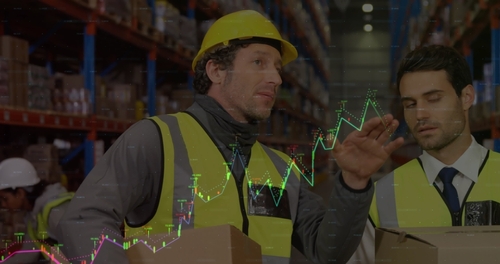
The retail landscape is undergoing seismic shifts, and at the heart of this transformation lies the critical function of order fulfilment. As we approach 2025, retailers must adapt to meet heightened consumer expectations for speed, convenience, and sustainability. Advancements in technology and the growing influence of omnichannel strategies are shaping the future of fulfilment, creating both opportunities and challenges for businesses.
Automation and AI Take Centre Stage
The rise of automation is set to redefine fulfilment processes. Technologies like Automated Storage and Retrieval Systems (AS/RS), robotic picking solutions, and conveyor belt systems are becoming increasingly sophisticated, enabling warehouses to process orders faster and with greater accuracy. Coupled with Artificial Intelligence (AI), these systems can optimise workflows, predict demand fluctuations, and reduce operational costs.
For example, AI-powered algorithms can forecast stock requirements by analysing customer behaviour and historical sales data. This reduces the risk of overstocking or stockouts, leading to more efficient fulfilment operations. In 2025, we can expect greater integration of machine learning with warehouse management systems (WMS), offering real-time insights and proactive adjustments to inventory levels.
The Growth of Micro-Fulfilment Centres
As consumer demand for same-day and next-day delivery grows, retailers are moving toward micro-fulfilment centres (MFCs). These compact, automated facilities are strategically located in urban areas to bring products closer to end consumers. By leveraging MFCs, retailers can significantly reduce delivery times while cutting last-mile logistics costs.
Retailers such as Walmart and Tesco have already started integrating micro-fulfilment solutions into their operations. In 2025, this trend will likely accelerate as more companies realise the benefits of localised inventory storage combined with rapid automation.
Omnichannel Fulfilment Becomes Standard
In 2025, omnichannel fulfilment will be non-negotiable for retail success. Customers now expect seamless shopping experiences, whether online, in-store, or via mobile apps. Retailers must integrate their channels to provide options like Buy Online, Pick Up In-Store (BOPIS), curb side pickup, and ship-from-store services.
This requires robust inventory synchronisation across platforms to ensure real-time stock visibility. Retailers with advanced omnichannel strategies will gain a competitive edge, delivering not only convenience but also personalisation based on customer preferences.
Sustainability as a Fulfilment Imperative
Sustainability is no longer optional—it’s a key factor influencing consumer decisions. In the fulfilment context, this means adopting eco-friendly packaging, reducing carbon footprints in delivery, and optimising supply chain efficiencies.
Emerging technologies like electric delivery vehicles, drone deliveries, and route optimisation software are helping retailers meet sustainability goals. For instance, Amazon and UPS are already experimenting with drone technology to offer faster, greener delivery options. By 2025, we’ll likely see these innovations become more mainstream.
The Role of Data and Analytics
Data is the backbone of modern fulfilment. Advanced analytics tools provide retailers with valuable insights into customer behaviour, operational performance, and market trends. Predictive analytics can anticipate spikes in demand, enabling retailers to prepare their supply chains accordingly.
Moreover, real-time tracking systems allow retailers and customers to monitor order progress, enhancing transparency and trust. Retailers who harness the power of data will be better positioned to adapt quickly to changing market dynamics in 2025.
Conclusion
The evolution of order fulfilment is reshaping the retail industry. Automation, AI, micro-fulfilment centres, omnichannel integration, sustainability, and data analytics are all driving this transformation. For retailers, the challenge lies in embracing these advancements to create efficient, customer-centric, and sustainable fulfilment solutions.
As we approach 2025, businesses that invest in innovative technologies and adapt to consumer demands will not only survive but thrive in the competitive retail environment. The future of order fulfilment is here, and it promises to revolutionise how retailers operate, deliver, and engage with their customers.
Contact us at RCS to learn more about how our System feature could help your business in 2025.